
AI and Machine Learning
AI and Machine Learning: Revolutionizing the Digital Frontier
Artificial Intelligence and Machine Learning: Revolutionizing the Digital Landscape
Artificial Intelligence (AI) and Machine Learning (ML) have emerged as transformative technologies, reshaping the way businesses connect, operate, and grow in the digital age. From hyper-personalized marketing experiences to real-time data analysis, these technologies are not just optional add-ons—they’re becoming essential drivers of innovation and efficiency.
✨ Key Ways AI and ML Are Transforming Digital Marketing: Smart Personalization: Utilize machine learning algorithms to deliver content customized to individual user behavior, enhancing engagement and conversion rates.
Predictive Analytics: Anticipate customer behavior and market trends through AI-driven insights, enabling proactive and informed decision-making.
AI-Generated Content: Optimizewriting, A/B testing, and social media campaigns while preserving the brand’s voice and consistency.
Chatbots & Virtual Assistants: Offer round-the-clock customer support, improve lead nurturing, and create seamless user interactions.
Voice & Visual Search Optimization: Update SEO strategies to align with emerging trends influenced by integration in search platforms.
💡 Real-World Impact: Companies are increasingly leveraging AI to enhance their campaigns, such as Netflix’s recommendation engine, Amazon’s predictive logistics, and Spotify AI-curated playlists. For digital marketers, adopting these tools enables scalable personalization without compromising authenticity.
Artificial Intelligence (AI) and Machine Learning (ML) are transforming industries, from healthcare to finance, education to entertainment. At the heart of ML are three fundamental approaches: Supervised Learning, Unsupervised Learning, and Reinforcement Learning. Each has its own philosophy, applications, and strengths. Let’s explore them in detail.
📘 Supervised Learning – Learning with Guidance
Supervised learning is like teaching a child with flashcards. The model is trained on labeled data, meaning every input comes with a known output.
How it works: The algorithm learns the relationship between inputs and outputs, then applies this knowledge to predict outcomes for new data.
Key tasks:
Classification: Categorizing data (e.g., spam vs. non-spam emails).
Regression: Predicting continuous values (e.g., house prices).
Real-world examples:
Diagnosing diseases from medical records.
Predicting student performance based on past scores.
👉 Strength: High accuracy when labeled data is available. 👉 Limitation: Requires large, well-annotated datasets, which can be expensive to create.
🔍 Unsupervised Learning – Discovering Hidden Patterns
Unsupervised learning is like exploring a library without a catalog. The model works with unlabeled data, trying to uncover hidden structures or groupings.
How it works: The algorithm identifies similarities, clusters, or associations without predefined labels.
Key tasks:
Clustering: Grouping similar data points (e.g., customer segmentation).
Association: Finding relationships (e.g., “people who buy bread often buy butter”).
Real-world examples:
Market basket analysis in retail.
Organizing large document collections.
👉 Strength: Reveals insights when labels are unavailable. 👉 Limitation: Results may be harder to interpret and validate.
🎮 Reinforcement Learning – Learning by Trial and Error
Reinforcement learning is like training a pet with rewards. The model learns by interacting with an environment, receiving feedback in the form of rewards or penalties.
How it works: An agent takes actions in an environment, guided by a reward system. Over time, it develops a strategy (policy) to maximize rewards.
Key tasks:
Sequential decision-making.
Policy optimization.
Real-world examples:
Robots learning to walk.
AI mastering complex games like Chess or Go.
Autonomous vehicles navigating traffic.
👉 Strength: Excels in dynamic, sequential environments. 👉 Limitation: Requires extensive computation and careful reward design.
⚖️ Comparing the Three Approaches
| Aspect | Supervised Learning | Unsupervised Learning | Reinforcement Learning |
|---|---|---|---|
| Data Type | Labeled | Unlabeled | Interaction-based |
| Main Tasks | Classification, Regression | Clustering, Association | Policy optimization, Sequential decisions |
| Feedback | Direct (labels) | None | Rewards/Penalties |
| Applications | Spam detection, medical diagnosis | Customer segmentation, anomaly detection | Robotics, gaming, autonomous driving |
✨ Conclusion
Supervised, unsupervised, and reinforcement learning are the three pillars of machine learning. Together, they empower AI systems to predict, discover, and adapt. Whether it’s diagnosing diseases, segmenting customers, or teaching robots to walk, these approaches are shaping the future of technology.
These methods allow algorithms to identify patterns, make predictions, and evolve through experience. From personalized Netflix recommendations to fraud detection in banks, Machine Learning applications are everywhere
Real-World Applications
In marketing, AI-powered tools optimize customer engagement, personalize advertisements, and predict consumer behavior. In healthcare, Machine Learning algorithms assist in early disease detection, treatment planning, and analyzing medical images. In transportation, AI-driven systems power autonomous vehicles, improving efficiency and safety.
Moreover, businesses harness predictive analytics through ML to forecast demand, streamline operations, and increase ROI. The integration of Natural Language Processing (NLP), a branch of AI, enables machines to understand and generate human language, fueling the rise of chatbots and virtual assistants.
Lack of Transparency (Black Box Problem)
Many ML models, especially deep learning systems, are incredibly complex and opaque. This lack of explainability makes it difficult to understand how decisions are made, challenging both accountability and trust
As automation becomes more widespread, job loss in certain sectors is a real concern. While AI can create new opportunities, it can also exacerbate inequality if reskilling efforts and safety nets aren’t in place.
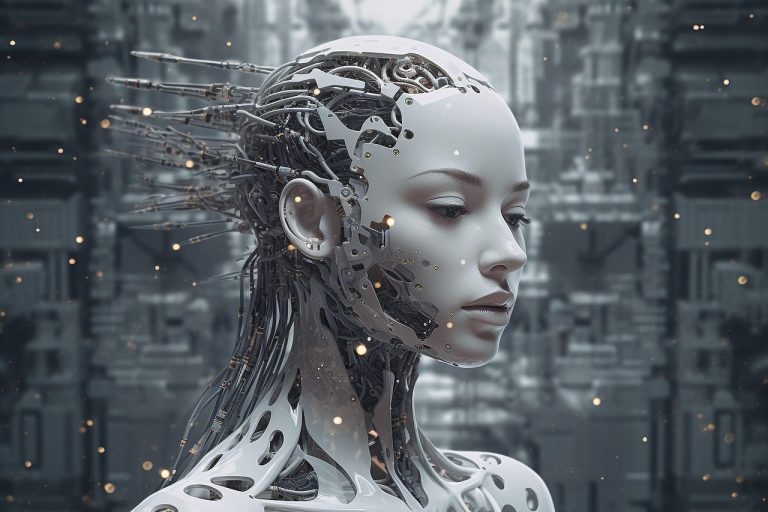
What Is Artificial Intelligence (AI)?
AI is the broader concept of machines being able to simulate human intelligence. This includes:
Reasoning and decision-making
Understanding language (like chatbots or voice assistants)
Recognizing patterns in images or speech
Learning and adapting over time
Think of AI as the umbrella under which many technologies—including ML—live.
What Is Machine Learning (ML)?

AI and Machine Learning: Powering the Future of Digital Innovation
Artificial Intelligence (AI) and Machine Learning (ML) are no longer just buzzwords—they’re the backbone of modern innovation. From predictive analytics to hyper-personalized experiences, these technologies are radically reshaping how businesses operate, connect with customers, and create value.
What Is AI and How Is It Different from ML?
AI refers to the ability of machines to mimic human intelligence: learning, reasoning, and making decisions. Whether it’s a chatbot responding to queries or voice assistants like Siri and Alexa understanding your commands, AI systems are designed to “think” in real time.
ML is a subset of AI. Rather than being programmed with specific rules, ML algorithms learn patterns from data. Over time, they improve performance based on new inputs—whether it’s recommending your next movie or segmenting your customer base.
Think of AI as the brain, and ML as the process of learning how to use it efficiently.
🚀 How AI and ML Are Transforming Digital Marketing
In digital marketing, AI and ML offer marketers a competitive edge through:
Hyper-Personalization: Algorithms analyze user behavior to serve tailored content, increasing engagement and conversion rates.
Predictive Analytics: ML models forecast customer actions, helping marketers anticipate needs and craft relevant campaigns.
AI-Driven Content Generation: Tools powered by AI write blog posts, social media captions, and ad copy aligned with brand voice.
Smart Automation: From automated emails to lead scoring systems, AI streamlines repetitive tasks while increasing accuracy.
Chatbots and Virtual Assistants: These provide 24/7 customer support and improve user experience by offering instant, intelligent responses.
Voice and Visual Search Optimization: With the rise of tools like Google Lens and voice search, marketers can optimize content beyond text-based SEO.
💡 Real-World Applications
Across industries, AI and ML are having a profound impact:
Healthcare: ML is used for disease prediction, medical image analysis, and treatment planning.
Retail: AI forecasts inventory needs and powers dynamic pricing models.
Finance: Algorithms detect fraud and manage risk with high precision.
Transportation: Autonomous vehicles and logistics systems leverage AI for route optimization and safety enhancements.
🧠 Types of Machine Learning
Understanding the core learning models helps clarify how ML functions:
| Type | Description | Example |
|---|---|---|
| Supervised Learning | Learns from labeled data | Spam email filters |
| Unsupervised Learning | Finds patterns in unlabeled data | Customer segmentation |
| Reinforcement Learning | Learns by trial and error to maximize reward | Recommendation engines |
These models enable businesses to adapt, learn from behavior, and improve performance dynamically.
⚖️ Ethical Considerations and Challenges
While promising, AI and ML bring challenges that demand careful handling:
Data Privacy: AI thrives on data, but responsible use is crucial to protect user autonomy.
Algorithmic Bias: If training data reflects societal bias, AI systems can unknowingly replicate discrimination.
Transparency: Many deep learning models act as “black boxes,” making it hard to explain decisions.
Job Displacement: Automation may lead to job loss in certain sectors unless reskilling efforts are prioritized.
📈 Why Marketers Should Embrace AI and ML
For digital marketers, these technologies enable personalized storytelling at scale, improve campaign ROI, and unlock deeper insights into audience behavior. Whether you’re running SEO audits or optimizing ad strategies, integrating AI tools is no longer a luxury—it’s essential.
🏁 Conclusion
AI and ML are not just reshaping marketing—they’re reimagining the entire digital landscape. Their ability to automate, adapt, and personalize makes them indispensable tools for future-focused businesses. As these technologies continue to evolve, marketers must stay curious, ethical, and innovative to harness their full potential.
Machine Learning: Transforming Data into Intelligence
📌 Introduction
Machine Learning (ML) is one of the most transformative technologies of our time. It enables computers to learn from data and improve performance without explicit programming. From personalized recommendations on Netflix to fraud detection in banking, ML is quietly powering the digital world around us.
🤖 What is Machine Learning?
At its core, Machine Learning is a subset of Artificial Intelligence (AI) that focuses on building algorithms capable of identifying patterns and making decisions. Instead of following rigid instructions, ML systems adapt and evolve as they process more data.
Key Types of Machine Learning:
Supervised Learning → Models learn from labeled data (e.g., predicting house prices).
Unsupervised Learning → Models find hidden patterns in unlabeled data (e.g., customer segmentation).
Reinforcement Learning → Models learn by trial and error, receiving rewards or penalties (e.g., training robots or game AI).
🚀 Applications of Machine Learning
Machine Learning is everywhere, often in ways we don’t notice:
Healthcare → Predicting diseases, drug discovery, medical imaging.
Finance → Fraud detection, algorithmic trading, credit scoring.
Retail & Marketing → Personalized recommendations, dynamic pricing, customer sentiment analysis.
Transportation → Self-driving cars, traffic prediction, logistics optimization.
Education → Adaptive learning platforms, plagiarism detection, student performance prediction.
📊 Benefits for Businesses
Boost Efficiency: Automates repetitive tasks and reduces human error.
Data-Driven Decisions: Provides actionable insights from large datasets.
Competitive Advantage: Early adopters gain a significant edge in innovation.
Scalability: ML models can handle massive amounts of data effortlessly.
🔮 Future of Machine Learning
The future of ML is intertwined with Generative AI, Edge Computing, and Explainable AI (XAI). As models become more powerful, ethical considerations like bias, transparency, and data privacy will shape how ML is deployed.
Emerging trends include:
AI-powered creativity (art, music, content generation).
Healthcare breakthroughs with predictive diagnostics.
Smarter cities using ML for energy, traffic, and safety optimization.
Machine Learning is not just a buzzword—it’s a powerful tool reshaping industries and everyday life. Whether you’re a business owner, student, or tech enthusiast, understanding ML is essential to thrive in the digital age
What is Machine Learning?
ML is a subset of AI that enables systems to learn from data and improve over time without being explicitly programmed.
📌 Types of Machine Learning:
1️⃣ Supervised Learning – Learn from labeled data
➤ Example: Predict house prices using past sales (input: features like size, location; output: price)
2️⃣ Unsupervised Learning – Learn patterns from unlabeled data
➤ Example: Customer segmentation (grouping similar users without knowing labels)
3️⃣ Reinforcement Learning – Learn via trial & error using rewards
➤ Example: Training a robot to walk or a game bot to win
📌 Common Algorithms:
🔹 Linear Regression (for predicting numbers)
🔹 Logistic Regression (for binary classification)
🔹 Decision Trees / Random Forest
🔹 K-Nearest Neighbors (KNN)
🔹 K-Means Clustering
🔹 Support Vector Machines (SVM)
📌 Key ML Concepts:
🔹 Features – Inputs to your model (e.g. age, income)
🔹 Labels – What you’re predicting (e.g. will buy or not)
🔹 Training & Testing Data – To learn & validate model
🔹 Overfitting – Model memorizes instead of generalizing
🔹 Evaluation Metrics – Accuracy, Precision, Recall, F1 Score
📌 Example Project:
Loan Approval Prediction
Data: Applicant info (age, income, credit score)
Goal: Predict whether loan should be approved
Steps:
1. Clean data
2. Choose algorithm (e.g. logistic regression)
3. Train model
4. Evaluate accuracy
5. Deploy for real-time use
Applications of Machine Learning
Machine Learning applications are reshaping industries,
Healthcare AI → Predicting diseases, drug discovery, medical imaging.
Finance ML Models → Fraud detection, algorithmic trading, credit scoring
Retail & Marketing AI → Personalized recommendations, dynamic pricing, customer sentiment analysis. Transportation AI → Self-driving cars, traffic prediction, logistics optimization. Education Technology → Adaptive learning platforms, plagiarism detection, student performance prediction.



Here are some of the business benefits of using artificial intelligence and machine learning:
Wider data ranges
Analyzing and activating a wider range of unstructured and structured data sources.
Faster decision-making
Improving data integrity, accelerating data processing, and reducing human error for more informed, faster decision-making.
Efficiency
Increasing operational efficiency and reducing costs.

AI and Machine Learning: Basic Concepts
AAI and Machine Learning are not just technical concepts—they are tools for innovation. By mastering the basics, businesses and individuals can unlock new opportunities, drive efficiency, and create meaningful impact in the digital age.
What is Machine Learning?
Machine Learning is a subset of AI that focuses on teaching machines to learn from data. Instead of being explicitly programmed, ML systems improve their performance through experience.
Artificial Intelligence (AI) and Machine Learning (ML) are no longer futuristic buzzwords—they are shaping the way businesses, communities, and individuals interact with technology today. Understanding their fundamentals is the first step toward leveraging them for growth, innovation, and impact.